
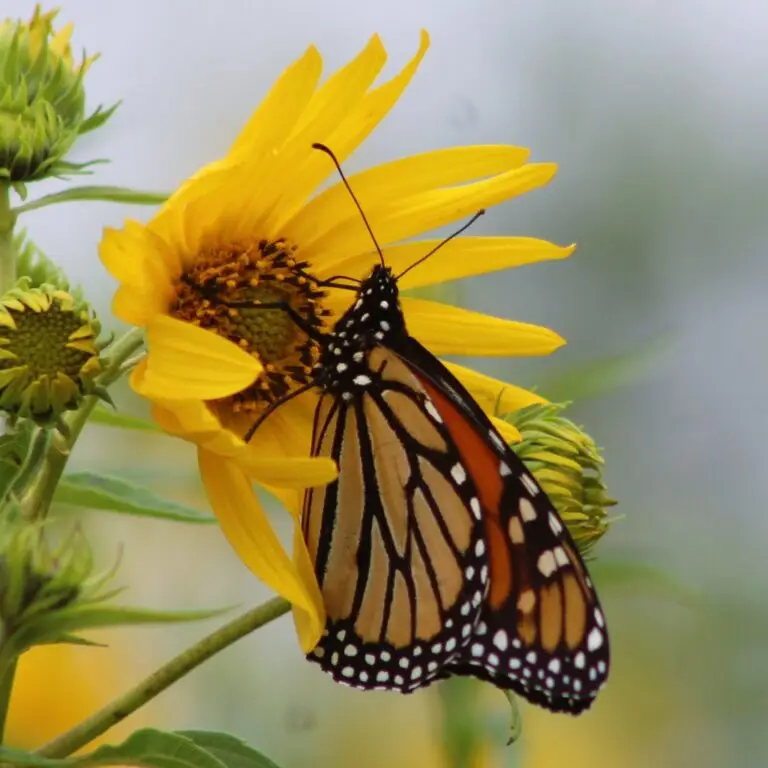
The monarch butterfly may be small, but its ripple effect is huge. Known for its orange-and-black wings and long migration, the monarch connects gardens, meadows, farms, roadsides and forests across North America.
Ecological Role
Monarch butterflies are pollinators. As adults drink nectar from flowers, they help move pollen between plants. Their caterpillars also depend completely on milkweed, which means protecting monarchs also helps protect native plant habitats.
What It Helps
Monarch habitat supports more than monarchs. Milkweed and native wildflowers also feed bees, moths, beetles, flies, hummingbirds and other butterflies. A good monarch garden often becomes a small wildlife refuge.
What Happens If It Disappears
Monarch habitat supports more than monarchs. Milkweed and native wildflowers also feed bees, moths, beetles, flies, hummingbirds and other butterflies. A good monarch garden often becomes a small wildlife refuge.
Conservation Status
The migratory monarch is considered Vulnerable by the IUCN and in the United States it is currently proposed as threatened under the Endangered Species Act.
Human Connection
Monarchs are one of the best-known butterflies in the world. They teach people about migration, transformation, native plants, and why even small insects matter.
How You Can Help
Plant native milkweed, grow nectar-rich native flowers, avoid pesticides, leave some natural areas unmowed, and support pollinator-friendly gardens and conservation programs.
Final Thought
The monarch butterfly shows how one small species can reveal the health of an entire ecosystem. Protecting monarchs helps protect pollinators, native plants, and the wild connections that keep nature balanced.